Prima Domenica Prezzi Philadelphia Museum of Art Philadelphia Museum of Art Philadelphia
Essay
The Philadelphia Museum of Art—originally known as the Pennsylvania Museum and School of Industrial Art—developed from collections exhibited in 1876 at the Centennial Exhibition in Fairmount Park. Modeled on the Due south Kensington Museum in London, the new institution sought through both collections and classes to teach design so that goods produced in Philadelphia would exist more competitive with those made in Europe. Past the 1920s, all the same, the museum shifted its emphasis toward cultivating elite gustatory modality as it constructed a monumental new edifice, acquired landmark collections, and courted wealthy patrons. With 90 percentage of its drove acquired from donors but too a longstanding, if failing, financial relationship with Philadelphia's city authorities and the Fairmount Park Commission, the museum negotiated a tension familiar to most art museums between the aesthetic values of high-gild collectors and a charitable mission to enhance public life through art.
The Pennsylvania Museum and School of Industrial Art was founded in 1876 and opened to the public in Fairmount Park's Memorial Hall in 1877, but members of the Fairmount Park Commission had discussed the thought fifty-fifty before. The Centennial brought the museum idea to fruition as members of the semiautonomous Park Commission, other city officials, and appointees to the federally authorized Centennial Committee worked together to stage the Exhibition. A combination of the Park Committee, the Urban center, and museum trustees connected to make decisions—and to complicate controlling—about the institution throughout its history.
The Museum and School of Industrial Art arrived at a moment of modify both in American history and in the history of museums. The Centennial Exhibition, while celebrating the history of American independence, also promoted the land and the urban center of Philadelphia equally progressive, post-Ceremonious War societies at the forefront of modernity and the Industrial Revolution. All the same, when Americans compared themselves to their European counterparts in scientific discipline, industry, or art, they oftentimes feared they were lacking. During this period, elites by and large designed museums equally sites for the middle and upper classes to cultivate or prove their practiced taste. At the Museum and School of Industrial Fine art, however, the decorative objects retained from the Centennial were also a teaching drove viewed by working people—factory laborers, artisans, and industrial designers—who might be inspired to make and consume amend, more beautiful industrial appurtenances.
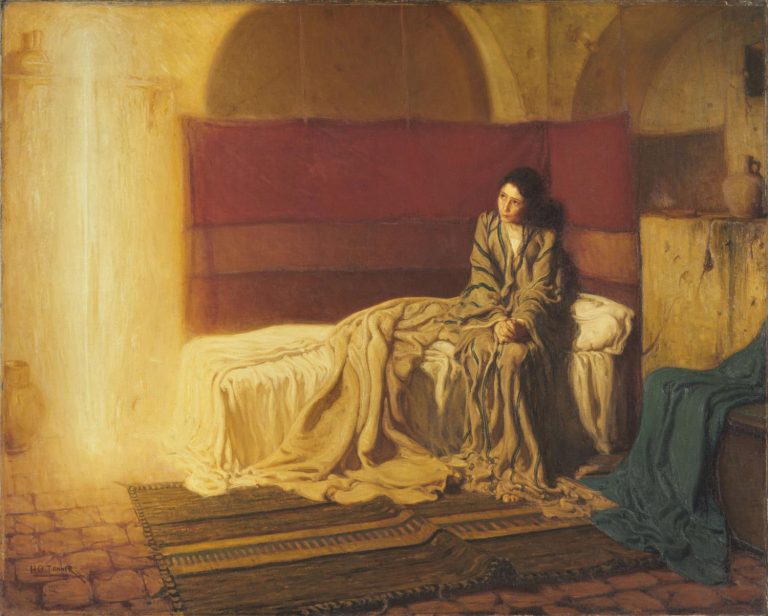
Much like the Academy of Natural Sciences (founded in 1812) and the Academy of Pennsylvania Museum of Archaeology and Anthropology (founded in 1877), the Museum and Schoolhouse of Industrial Art organized its collections scientifically and systematically. Large glass cases in Memorial Hall displayed arrays of artifacts according to role and material, progressing through time. However, over the next few decades, the collections began to change. The 1893 bequest of Anna H. Wilstach (1822-92) to the Fairmount Park Committee and to the museum began the institution's movement toward fine art. The paintings she donated were valuable, only the $500,000 discretionary fund she left for purchases had even more than dramatic impact. Over time, the bequest led to nearly m acquisitions including innovative masterpieces by Paul Cézanne (1839-1906) and Henry Ossawa Tanner (1859-1937), an African American.
Prominent Philadelphia Donors
Other valuable collections of Western fine art followed in the early on twentieth century, including those of William L. Elkins (1832-1903), an oil and transportation magnate, and his son George W. Elkins (1858-1919); John Howard McFadden (1850–1921), a wealthy cotton fiber merchant; and John One thousand. Johnson (1841-1917), a lawyer for corporations like Standard Oil, Baldwin Locomotive, and United States Steel. These men—some of them also powerful Fairmount Park commissioners with vested interests in the museum already— officially bequeathed their collections to the metropolis and the Park Commission, only the museum then cared for and exhibited them. All the donors were prominent Philadelphians and very wealthy, just as well philanthropic and civic-minded. Johnson, whose collection of European Renaissance fine art was the biggest prize out of whatever acquired at this time, said in his will: "I accept lived my life in this City. I want the drove to take its home hither."
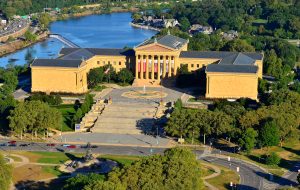
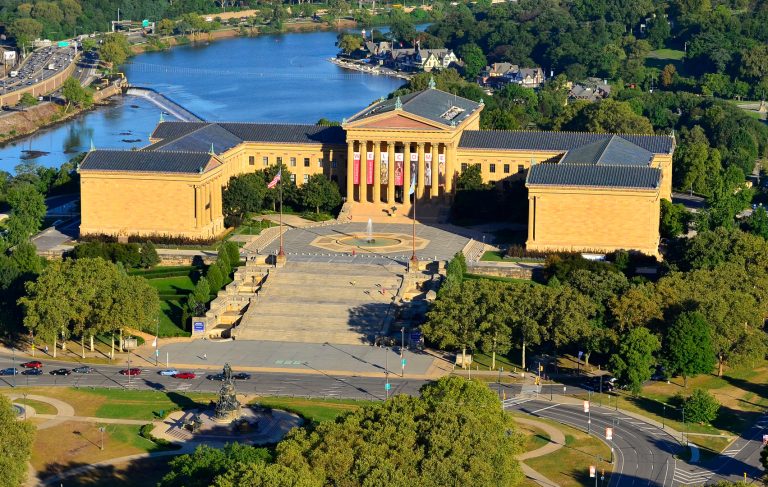
Elkins and McFadden made their bequests contingent on the cosmos of a new edifice to house them, and farther donations of collections made more than space in a grander setting, closer to Metropolis Hall, a priority. By 1917, the museum trustees and staff finalized plans to leave Memorial Hall for a new edifice on the almost-completed parkway extending from Metropolis Hall to Fairmount Park. Horace Trumbauer (1868-1938), Paul Cret (1876-1945), and the business firm of Zantzinger, Borie, and Medary designed the edifice collaboratively with labor past numerous others including perspective drawings by Julian Abele (1881-1950), a rare opportunity for an African American builder at that time.
In 1928, the eclectic Greek Revival building opened at a cost to the city of $12 million. Because the building saturday on urban center land, the Fairmount Park Commission managed it with metropolis funds. When seeking financial donations, some of the museum's leadership emphasized the new building as a matter of civic pride for all citizens. Yet for museum president Eli Kirk Toll (1860-1933), such a monumental building also served to "encourage men who already have bought pictures to give them to the museum." In the spirit of both cutting costs and encouraging Toll's donors, the edifice was strategically constructed as a massive shell into which the museum could gradually build galleries for new collections. Those empty galleries could promise donors that their collections would not become into storage, but they besides became a hope that the urban center would non simply support public infinite in its parks, but also aristocracy taste in its museums.
A New Organizational Scheme
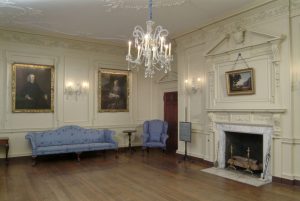
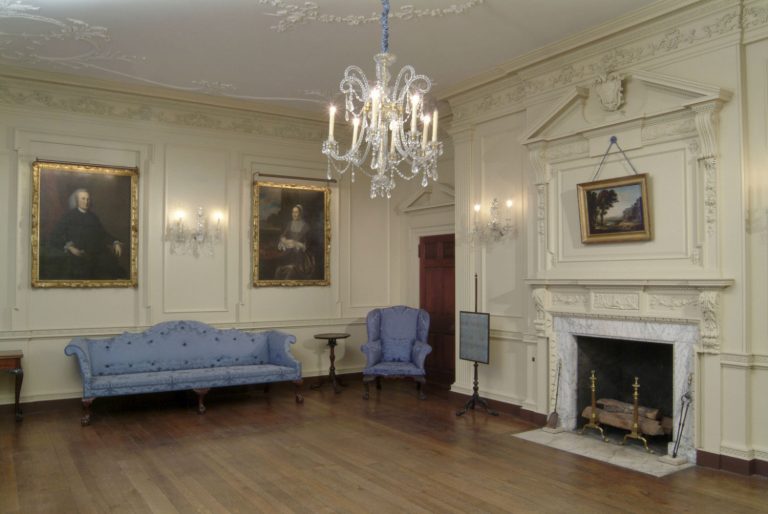
Starting in 1925, director Fiske Kimball (1888-1955) oversaw the building of galleries and the donation and purchase of new collections, but he too implemented a new organizational scheme for the works displayed in the new building. The new exhibits were not a systematic assortment, just a history of art. The 2nd floor used masterworks to show the evolution of European art from the Middle Ages to the modern era. Kimball also innovated in embedding flow rooms that further illuminated this chronology. While other museums staged rooms to represent specific times and places, Kimball began importing whole architectural elements to create context for furnishings and art. Combined with his floor-wide history of art, the museum became a "walk through time" both within and across galleries. Past the mid-1930s, Asian galleries in the S Wing housed art from India, Prc, Japan, and Islamic republic of iran but offered little explanation as to how they fit into the k narrative and inevitable march of Western progress portrayed elsewhere in the museum.
The beginning flooring, meanwhile, presented "study collections." In the S Wing, these more in-depth exhibits included displays of decorative arts that followed in the tradition of the original Pennsylvania Museum and School of Industrial Art. The works in the North Wing focused on specific eras and areas of Western art, but tellingly, maps for visitors labeled the galleries by collector with subject thing indicated in secondary text. Thus, while the South Fly's curation reflected the institution's original educational intention, the arrangement of the North Wing, much similar the compages of the museum, catered to wealthy donors. The new building independent these study collections, but information technology did not house the schoolhouse. Although the 2 were still officially connected, by 1938 the institutions became the Philadelphia Museum of Art (PMA) located on the Parkway and the Philadelphia Museum School of Industrial Fine art located on South Broad Street.
Despite the museum's dwindling human relationship to the school, other kinds of outreach extended to the public. Under Kimball the museum founded a Sectionalization of Teaching in 1929 and in 1931 opened a curt-lived branch at Lx-9th Street Final in conjunction with the Carnegie Foundation and a developer in Due west Philadelphia. Long-lasting affiliations that began in the 1920s included two Fairmount Park celebrated houses (Cedar Grove and Mount Pleasant) and the Rodin Museum on the Parkway. In 1944, the museum established another indelible relationship by like-minded to administer the Fleisher Art Memorial at 8th and Catharine Streets. Fleisher's free classes, unlike those at the Schoolhouse of Industrial Art, taught art as recreation not profession.
Progress Fifty-fifty During the Low
Although not immune to the bear on of the Great Low, the PMA completed dozens of galleries throughout the 1930s to house acquisitions such as the Edmond Foulc Collection of Medieval and Renaissance Art. Much of this construction occurred with assist from New Deal programs similar the Works Progress Assistants. The museum also gained artworks, especially African American prints, from the Public Works of Art Projection. While the PMA's finances suffered in the 1930s, it continued to spend, and some raised questions about whether art was a worthy cause when so many people were out of piece of work and hungry. Amongst those raising these questions in the early 1930s were Mayor Harry A. Mackey (1869-1938) who, with Metropolis Quango, controlled much of the museum's budget. Cartoonists at The Philadelphia Record echoed those concerns when the museum bought Cézanne's The Bathers for $110,000 in 1937.
During the Kimball era, the museum made huge acquisitions including an intact French Medieval cloister, just the emphasis on recreating the past concerned some who felt the museum was falling backside past not collecting more innovative modernistic art. The museum caused some modern works—like The Bathers and the photography collection of Alfred Stieglitz (1864-1946)—in the 1940s. It was later, in the 1950s, that the Walter and Louise Arensberg Drove—including many works by Marcel Duchamp (1887-1968)—and the A. Eastward. Gallatin Collection (too known as The Museum of Living Art) established the PMA as a major repository of modern and contemporary art.
The Arensberg and Gallatin collections, donated from exterior Philadelphia, demonstrated the growing reputation of the PMA and the piece of work information technology contained. The Arensbergs, for example, selected the PMA considering they believed their drove would be near valued and exercise the most practiced in Philadelphia. Some Philadelphia collectors, all the same, spurned the museum. Joseph Widener (1871-1943)—a Philadelphian who was heir to his father's transportation fortune and had longstanding, multigenerational connections to the metropolis and the museum—slighted Philadelphia and in 1942 opted to enshrine himself and his collection at the National Gallery of Art in Washington, D.C. With the opposite motivation, yet similar effect, in 1922 Albert Barnes (1872-1951) created his own educational foundation so his collection might exist used to combat the elitism of the art world in general and Kimball'due south PMA in particular.
The First Admission Fee, 35 cents
In 1962, the museum which was previously free began to accuse an access fee of 35 cents, merely during that decade information technology besides expanded its pedagogy programs for adults and schoolchildren, and in 1970 it created a Section of Urban Outreach (DUO). If the access fee fabricated the museum less accessible, programs like DUO's murals and other public works made it more so.
Throughout the 1970s, the museum responded to other trends in the museum world also. Information technology added visitor-centered amenities similar a restaurant and air conditioning. Information technology too began hosting more than blockbuster shows featuring recognizable artists similar Duchamp and Vincent Van Gogh (1853-90). However, the PMA was more frequently an early adopter than an innovator. Although the museum's founding as a schoolhouse for industrial designers in one case set up it apart from institutions like the Metropolitan Museum of Art in New York, by 1964 the schoolhouse officially separated from the museum, eventually condign known as the University of the Arts.
The d'Harnoncourt Era
In 1982, Anne d'Harnoncourt (1943-2008), a Duchamp scholar and longtime modern fine art curator at the museum, became director. She continued to build the modernistic and contemporary collections with major acquisitions past artists such as Cy Twombly (1928-2011) and Bruce Nauman (b. 1941). She also caused the Muriel and Philip Berman Collection of prints and drawings past onetime masters and presided over a 1989 legal victory that allowed the Johnson drove to exist integrated into the collections at large. This led to reorganizing the European art galleries in an even more than monumental narrative of Western masterpieces that better realized Kimball'south vision of exhibiting the paintings every bit a walk through time and a march of progress. While more than spectacular co-ordinate to many standards because of the quality of the work, the exhibits inverse piffling about the standard narrative of fine art history. In contrast, the African American Collections Committee, created in 2001 for the museum'southward 125th anniversary, fabricated the collections more inclusive by purchasing works that filled gaps where other donors failed to collect.
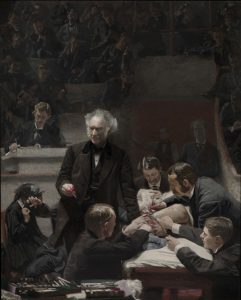
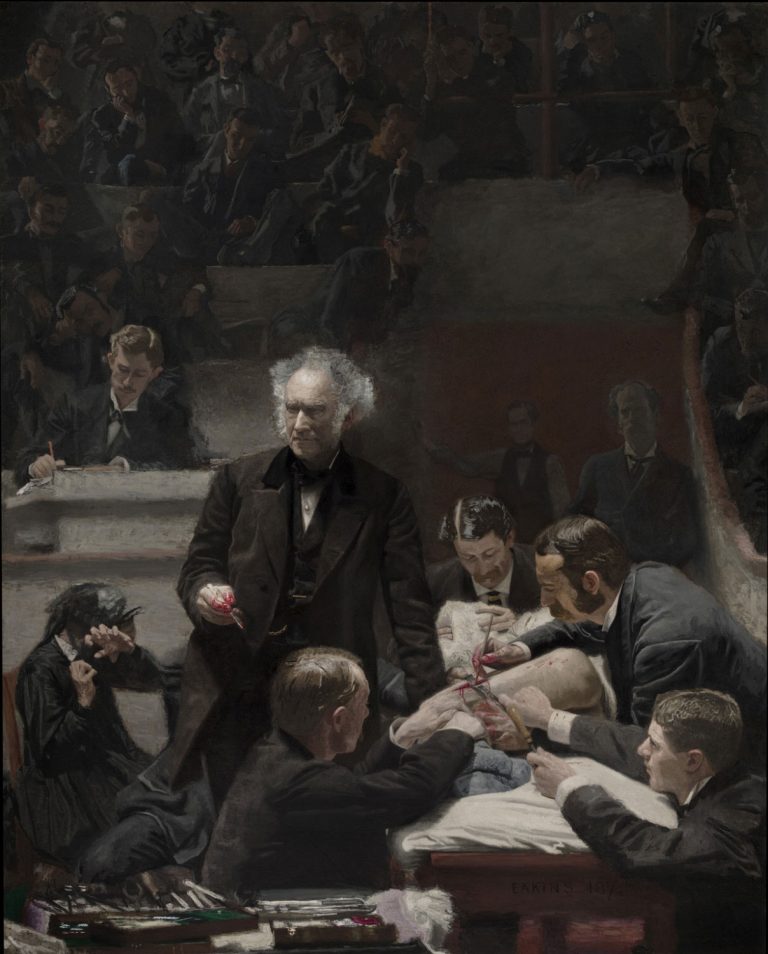
In many ways, d'Harnoncourt continued in the tradition of Kimball as she expanded the reputation of the PMA and Philadelphia every bit an elite center of art collecting and exhibition. The $68 one thousand thousand joint effort with the Pennsylvania Academy of the Fine Arts in 2007 to buy Thomas Eakins' (1844-1916) The Gross Dispensary when Thomas Jefferson University wanted to sell it epitomized a dedication to fine fine art and the city at a fourth dimension when the city was perpetually on the verge of bankruptcy and investing less and less in its cultural institutions. Notwithstanding the Gross Clinic campaign to keep the iconic painting in Philadelphia also showed delivery to an art world steeped every bit in coin and taste every bit in public service and inclusive borough pride. Likewise, the addition of the Perelman Edifice on Pennsylvania Avenue primarily provided more than space for existing collections, although it likewise held the hope of existence a more than flexible and more than community-oriented space than the museum's main temple on the hill.
Plans for an expansion designed by Frank Gehry (b. 1929) began during d'Harnoncourt'southward tenure, then commenced construction in 2017 under the directorship of Timothy Rub (b. 1952). It connected projects undertaken since the 1970s to make the museum more than welcoming to visitors, specially those with cars, and easier to navigate both inside and out. At the same fourth dimension, digital initiatives and educational outreach promised to expand the reach of the museum in means that paralleled earlier efforts to create audio guides for the galleries, develop curriculum for schools, and provide distance programs through teleconferencing and telephones.
The Iconic Museum Steps
The museum, a dwelling to 240,000 priceless objects and an ongoing recipient of funding from the metropolis which owned its building, always identified itself as a civic institution for Philadelphians. This extended to the museum's most visible public infinite, the iconic lxx-2 steps leading up to the museum's Parkway-facing entrance. With a spectacular view of Metropolis Hall down the Benjamin Franklin Parkway, the steps became a must-encounter attraction for tourists, the atomic number 82-in on sports broadcasts and other televised events, and shorthand for the city in pop media. Nevertheless, this was equally much because of Rocky Balboa's training montage in the Oscar-winning flick Rocky (1976) as it was because of John Johnson or Fiske Kimball. Instead of creating literal common ground between elite, private benefactors and a broader public, a debate emerged over where the statue of Rocky donated by actor and star of the movie Sylvester Stallone (b. 1946) should stand. Many at the museum argued that it was a picture prop, non properly art, and the statue spent years at the Spectrum arena in South Philadelphia before existence placed not at the top of the steps but at the bottom in 2006. This was revealing of how the museum negotiated the interests of different audiences who sometimes struggled to notice common ground in fine art, specially when the icons of one grade could be pushed to the side to legitimate those of the other.
Despite the snub of Rocky, the PMA embraced more accessible, community-driven interpretations of its collections and the broader role of the art museum. A cheeky advertizement campaign from 2017 featured nonchalant visitor commentary—Botticelli's Portrait of a Young Man was captioned, "I retrieve he's throwing some serious shade"—that sanctioned laughter at the obscurity of high cultural taste. Even more than progressively, the "Philadelphia Assembled" exhibit, also in 2017, combined art and civic appointment. Equally an case of the museum's efforts to become more politically relevant to a irresolute society, the exhibit gave space—albeit only at the Perelman Building—to individuals and organizations to create stories of resistance and community building, challenging the cultural hierarchies of the past and sharing authority with a more than inclusive customs.
The Philadelphia Museum of Fine art in most ways fit the paradigm of the encyclopedic art museum as information technology had existed in Europe and North America since the nineteenth century. It had unique origins in pedagogy and industrial pattern, merely information technology rapidly fell into the patterns of similar institutions that showcased monumental narratives of Western fine art. Over time it became more inclusive with programs to sponsor public fine art and to acquire and exhibit more fine art by women and people of colour, although funding, purchases, and outreach programs to under-served communities could only brainstorm to address the history of an establishment whose world-renowned collection reflected the hierarchical tastes of elite donors and curators. Past the twenty-starting time century, exhibition and program strategies sought to mobilize the museum and its collections in multiple and sometimes surprising ways, despite the heritage they almost visibly embodied.
Mabel Rosenheck is a writer and historian in Philadelphia. She received her Ph.D. in media and cultural studies from Northwestern Academy and works at the Wagner Free Institute of Science, Temple University, and elsewhere.
Copyright 2019, Rutgers University
Gallery
The Annunciation
Philadelphia Museum of Art
Built-in to a minister of the African Methodist Episcopal Church, Henry Ossawa Tanner gained a reputation for his religious paintings. In 1897, Tanner travelled to Egypt and Palestine and was influenced by the people, culture, and architecture he experienced at that place. In this painting, The Annunciation, he depicted the moment when the angel Gabriel tells Mary that she will bear the Son of God. Tanner chose to represent Mary unusually, as an adolescent dressed in Eye Eastern peasant clothing and without a halo or any holy attributes. In 1899, the Philadelphia Museum of Fine art purchased the painting, making it the first major museum to own a work by an African American creative person.
The Gross Dispensary
Philadelphia Museum of Fine art
Thomas Eakins painted The Gross Clinic for Philadelphia'due south 1876 Centennial Exhibition to gloat the scientific achievements happening in the city. The artist depicted famous surgeon Dr. Samuel Gross in Jefferson Medical College'due south surgical amphitheater demonstrating a new procedure. The Centennial art jury rejected in the painting, challenge the field of study matter was as well bloody and brutal to display in the art building.
Thomas Jefferson University's alumni clan bought The Gross Clinic in 1878. The painting hung at the university until 2006, when Jefferson appear plans to sell the painting to fund new medical and educational facilities. A grassroots effort emerged to continue the painting in Philadelphia, later on The Crystal Bridges Museum in Bentonville, Arkansas offered to buy information technology. In 2007, the Philadelphia Museum of Art in a partnership with the Pennsylvania University of the Fine Arts purchased The Gross Dispensary for $68 million. This purchase epitomized the museum's dedication to fine fine art and the metropolis at a time when Philadelphia was investing less in its cultural institutions. However, in an echo of the museum's 1937 purchase of Cezanne's The Bathers, some were skeptical as to why $68 million should be spent on a work of art at a time of other pressing social, political, and economic problems.
Grace Kelly's Wedding Dress
Philadelphia Museum of Art
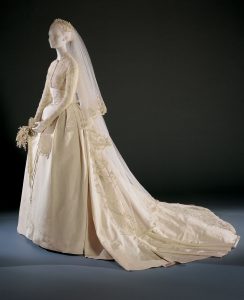
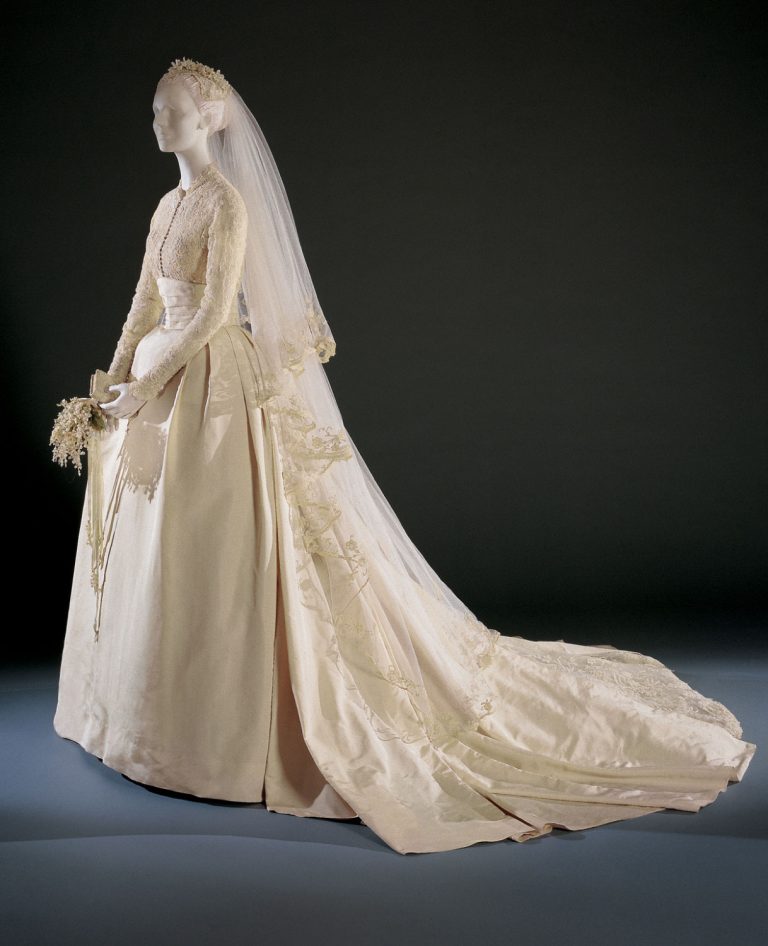
The museum holds more than 30,000 objects in its costume and textiles collection, making it one of the largest in the country. The costume collections, which included seventeenth- and eighteenth-century dress, expanded in the 1950s and 1960s with the improver of contemporary fashions by designers including Elsa Schiaparelli. Grace Kelly, who was born and raised on the Main Line, donated her wedding dress, pictured here, in 1956 subsequently marrying Prince Rainier of Monaco. In 2019, the museum'south exhibit Fabulous Way: From Dior'south New Look to Now, showcased haute couture and ready-to-habiliment pieces in the collection dating from 1947 to the present.
Philadelphia Museum of Art
Visit Philadelphia
The Pennsylvania Museum and Schoolhouse of Industrial Art opened in 1877 in Fairmount Park's Memorial Hall. In the early twentieth century, two prominent Philadelphians, William L. Elkins and John Howard McFadden, both bequeathed large collections of Western art contingent on the cosmos of a new building to house them. Past 1917, museum staff had finalized plans to move into a new building on the near-completed Benjamin Franklin Parkway. The new Greek Revival edifice, pictured here, opened in 1928 at a toll to the city of $12 million. Architects designed the building as a vanquish in which the museum could gradually build galleries for new collections. The empty galleries offered assurance to donors that their collections would not become into storage.
Powell House
Philadelphia Museum of Art
In 1925, museum director Kimball Fiske implemented a new organizational scheme to display the museum's artwork. Fiske designed the galleries to show the evolution of European fine art from the Middle Ages to the mod day. Period rooms, like the Powel House Room in this photograph, helped illustrate this chronology. This eighteenth-century parlor room from Philadelphia Mayor Samuel Powel's house hosted many important occasions, including George and Martha Washington's twentieth wedding anniversary party. For the furniture and paintings added from a different Philadelphia house, the Powel room provides an appropriate time-flow setting within the museum.
Pillared Temple Hall
Philadelphia Museum of Art
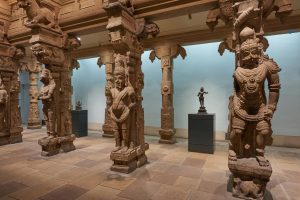
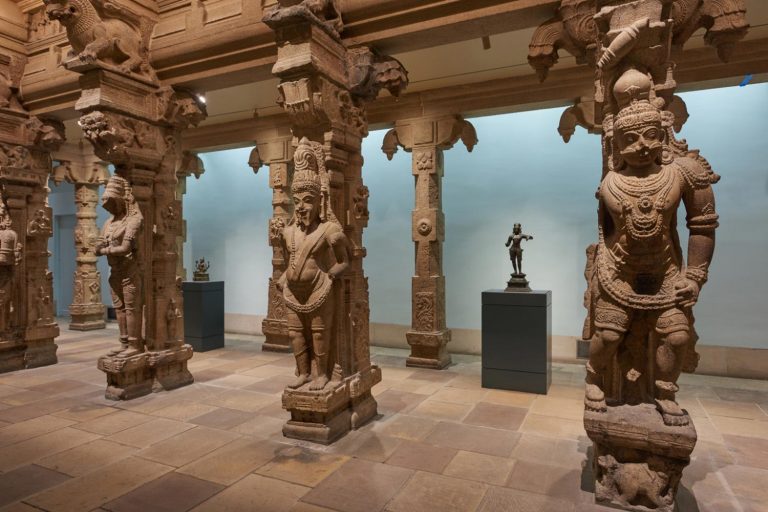
In 1941, the Philadelphia Museum of Art and the University of Pennsylvania Museum reached an understanding that the art museum would only collect Western, post-Christian art and Asian art created after 500 Ad. PMA subsequently became one of the most pregnant repositories of Indian temple sculpture in the The states subsequently prominent scholar Stella Kramrisch donated her drove of Indian temple sculpture to the museum in 1956 and served as curator until 1972.
The Pillared Temple Hall, shown in this photograph, is the only example of premodern Indian stone temple compages outside Southern asia. The hall came to the museum in fragments in 1919. The pieces, part of the Madana Gopala Swamy Temple in the southward Indian metropolis of Madurai, had been purchased past wealthy Philadelphian Adeline Pepper Gibson while she honeymooned in Madurai. After her death, her family donated the fragments to the museum. Early curators did not sympathise how to properly place the fragments. When the pieces were moved into the new museum building in 1928, museum director Fiske Kimball did not create specific drawn plans for the hall, and workers unfamiliar with its history configured the pieces. In 2016, Darielle Mason, the museum'southward Stella Kramrisch Curator of Indian and Himalayan Art, reinstalled the hall to better reflect its original employ and placement.
Links
- Philadelphia Museum of Fine art Online Collections Search
- Ghost Station At Art Museum Rises From The Expressionless (Subconscious City Philadelphia)
- Philadelphia Museum of Fine art Photographs, 1928 (Historical Society of Pennsylvania)
- Effectually the Philadelphia Art Museum (Association for Public Art)
- Diana of the Tower (Hidden Metropolis Philadelphia)
robinsontheim2000.blogspot.com
Source: https://philadelphiaencyclopedia.org/essays/philadelphia-museum-of-art/
0 Response to "Prima Domenica Prezzi Philadelphia Museum of Art Philadelphia Museum of Art Philadelphia"
Post a Comment